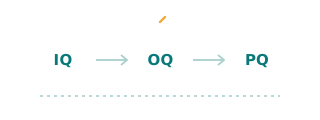
CQV stands for commissioning, qualification and validation: the three stages that take a facility, utility, piece of equipment or system from installed to approved for GMP use. Commissioning brings it into operation and confirms it works as engineered. Qualification documents that it is installed correctly and performs as required (IQ, OQ and PQ). Validation shows that the process, method or computerised system that uses it consistently produces the right result.
A short way to remember it: you commission and qualify equipment, and you validate processes. The three overlap, and most of the cost in a CQV programme comes from doing the same test twice because the stages were planned separately.
The difference between commissioning, qualification and validation
- Commissioning. Engineering activity under good engineering practice: setting up, adjusting, testing and fixing until the system works as designed. It covers everything, including parts with no impact on product quality.
- Qualification. A quality activity with approved protocols and reports. It focuses on the aspects that affect product quality and patient safety, and proves them through installation, operational and performance qualification. Our guide to equipment qualification under Annex 15 covers each stage.
- Validation. Documented evidence that a process consistently delivers product meeting its requirements: process validation, cleaning validation, analytical method validation and computerised system validation. It depends on qualified equipment underneath it.
The CQV lifecycle, step by step
- User requirements (URS). What the system must do, including the quality-critical requirements.
- Risk assessment and design review. Which aspects matter for product quality, and whether the design meets them (design qualification).
- FAT and SAT. Supplier testing at the factory and on site.
- Commissioning. Start-up, tuning and functional checks, documented well enough to reuse.
- IQ, OQ and PQ. Qualification of the critical aspects, using commissioning and supplier evidence where it is good enough.
- Process validation. For drug manufacturing, process performance qualification (PPQ) batches under FDA's guidance Process Validation: General Principles and Practices.
- Ongoing control. Change control, periodic review, requalification and continued process verification keep the validated state.
Is the V in CQV validation or verification?
Usually validation. Some teams, especially those following ASTM E2500, expand it as commissioning, qualification and verification, because E2500 replaces the separate IQ, OQ and PQ stages with verification of the critical aspects. Both versions describe the same work on equipment and systems. What changes is the vocabulary in your plans and protocols, so pick one and use it consistently in the validation master plan.
CQV vs CSV
Computerised system validation (CSV) is the part of validation that covers software: a LIMS, an MES, or the control system and data system on a piece of equipment. CQV covers the physical side: facilities, utilities and equipment. Modern equipment runs on software, so most CQV projects include some CSV, and the boundary between the two teams is where gaps appear. See CSV validation services and why equipment qualification and computer validation should not be separate worlds.
C&Q or CQV?
ISPE and most guidance talk about C&Q, commissioning and qualification. CQV adds validation to the name and is common in job titles and project plans, where the same team often runs both equipment qualification and process or cleaning validation. The activities are the same; CQV just names the whole chain.
The guides that shape CQV
- EU GMP Annex 15. The binding EU text on qualification and validation. It allows supplier and commissioning evidence to support qualification if you review and accept it.
- FDA process validation guidance (2011). The three-stage lifecycle: process design, process qualification and continued process verification.
- ISPE Baseline Guide Volume 5: Commissioning and Qualification (Second Edition). Published in June 2019. It sets out a science- and risk-based approach that uses a system risk assessment to find critical aspects and critical design elements, and focuses qualification on them.
- ASTM E2500. A standard for specification, design and verification that leans on engineering testing. It is an approach you map to Annex 15, not a replacement for it; see ASTM E2500 and Annex 15.
What a CQV engineer does
A CQV engineer plans and runs this work for equipment, utilities, facilities or systems. A typical week includes writing user requirements and risk assessments, drafting IQ, OQ and PQ protocols, executing tests on the floor, recording deviations when a result fails, and writing the summary report that releases the system for use.
Most come from mechanical, chemical or process engineering, or from a quality background, and many work on contract during capital projects such as a new fill line or a facility expansion. The skills that separate good ones are reading a P&ID, writing a test that a second person can repeat, and knowing which tests the commissioning team already ran.
Where CQV programmes lose time
- Commissioning nobody can reuse. If commissioning records are not attributable and controlled, qualification repeats them. Agreeing the record standard before commissioning starts is the biggest single saving; see leveraging commissioning.
- Qualifying everything. Without a risk assessment, every component gets the same depth of testing. The ISPE approach exists to stop that.
- Validation before qualification is closed. PPQ batches on equipment with open OQ deviations prove little and often have to be repeated.
- Forgetting the software. Control systems and data systems on the equipment need computerised system validation too, and the join between the two is where gaps hide.
Cybroscape GxP Copilot handles the document side of CQV for equipment and instruments: requirements, risk assessment, traceability and protocols drafted for a qualified person to review and approve. For hands-on support, our equipment and instrument qualification (CQV) service runs the work with your team, and our overview of digital validation tools lists the software CQV teams use.
Where to go next
Explore Cybroscape GxP Copilot for AI-native validation, Cybroscape TraceDraft for source-traceable clinical documentation, or book a demo to see either on your own data.