AI GxP validation for regulated life sciences
Equipment Qualification

USP <1058> Analytical Instrument Qualification (AIQ) Software Guide (2026–2027): Groups A, B, C & Hybrid CDS

How to automate Analytical Instrument Qualification (AIQ) under USP <1058> across Group A, Group B and Group C instruments, including hybrid HPLC / GC-MS / Chromatography Data Systems (Empower, OpenLab, Chromeleon) that combine USP <1058> with GAMP 5 and 21 CFR Part 11.

Cybroscape Technologies7 min read

Key takeaway

How to automate Analytical Instrument Qualification (AIQ) under USP <1058> across Group A, Group B and Group C instruments, including hybrid HPLC / GC-MS / Chromatography Data Systems (Empower, OpenLab, Chromeleon) that combine USP <1058> with GAMP 5 and 21 CFR Part 11.

USP <1058> Analytical Instrument Qualification (AIQ) is the pharmacopeial standard governing how laboratory instruments used to generate regulated quality control and stability data are qualified and kept in a qualified state. Unlike manufacturing equipment (governed by EU GMP Annex 15) or pure application software (governed by ISPE GAMP 5), USP <1058> classifies analytical instruments into Group A, Group B, and Group C based on intended use and complexity, and explicitly integrates software validation into the qualification of computerised Group C instruments.

This guide explains what USP <1058> requires for each group, why hybrid systems like an HPLC connected to a Chromatography Data System (CDS) cause the most FDA Form 483 findings, and how Cybroscape GxP Copilot automates USP <1058> protocol drafting, calibration gating and GAMP 5 traceability in one platform.

USP <1058> Groups A, B and C Explained (With Required Qualification Deliverables)

Under USP <1058>, the qualification effort is determined by the instrument's group classification in its actual laboratory application:

USP <1058> GroupDefinition & Lab ExamplesSoftware / Firmware LayerRequired Qualification Deliverables
Group AStandard observation equipment with no measurement capability or user calibration (e.g., magnetic stirrers, vortex mixers, nitrogen evaporators, light microscopes)NoneClassification rationale + verification against purchase spec and visual observation of proper operation; no formal IQ/OQ/PQ required
Group BInstruments providing measured values or controlling physical parameters (e.g., analytical balances, pH meters, ovens, incubators, refrigerators, automatic pipettes, Karl Fischer titrators)Built-in firmware (GAMP 5 Cat 3 equivalent)URS, IQ, OQ (calibration & operating range verification with traceable reference standards), user SOPs, preventive maintenance & periodic calibration schedule
Group CComputerised analytical systems where calculation, control and data acquisition depend on software (e.g., HPLC, UHPLC, GC-MS, LC-MS, UV-Vis/FTIR spectrophotometers, dissolution baths with workstation/CDS control)Configurable workstation or network software (GAMP 5 Cat 4 / Cat 5)Full URS, Design/Configuration Spec, per-requirement Functional Risk Assessment (including 21 CFR Part 11 / Annex 11 data integrity controls), IQ, OQ, PQ (holistic system suitability & repeatability), live RTM and Summary Report

The Hybrid Group C Trap: Where USP <1058> Meets GAMP 5 and 21 CFR Part 11

The vast majority of QC laboratory data integrity Warning Letters happen on Group C hybrid instruments, such as an Agilent or Waters HPLC/GC controlled by Empower, OpenLab or Chromeleon. A vendor service engineer arrives, runs the manufacturer's standard physical IQ/OQ checklist (pump flow rate, wavelength accuracy, injector precision) using a vendor binder, and leaves. The laboratory assumes the system is qualified.

When an FDA or EMA inspector audits the lab, they pull on the join between the physical instrument and the software:

  • Were individual analyst logins, role-based privileges (blocking analysts from deleting runs or altering integration parameters without an audit trail), and electronic signature meanings verified in OQ?
  • Were custom report templates, custom calculations, and LIMS data transfer interfaces validated under GAMP 5 Category 4?
  • Does PQ prove the holistic instrument-plus-software system performs reproducibly under your actual analytical methods and laboratory conditions?

See our dedicated guide to Chromatography Data System (CDS) validation and USP <1058> vs EU GMP Annex 15.

How Cybroscape GxP Copilot Automates USP <1058> Instrument Qualification

Almost every AI validation startup focuses exclusively on IT software (GAMP 5 CSV), forcing laboratory QA teams back into Word and Excel for USP <1058> instruments. Cybroscape GxP Copilot handles analytical instruments natively:

  • Deterministic USP <1058> Group A, B & C classification: Answer 12 guided intake questions from your instrument URS or vendor manual; GxP Copilot deterministically assigns Group A, B or C (plus GAMP 5 Category 3/4/5 for any connected workstation or CDS software) and scopes the exact deliverables required.
  • AI-drafted AIQ protocols in your own templates: Generates the URS, Functional Risk Assessment, IQ, OQ (with metrological reference instrument tables and operating range challenge tests) and PQ protocols, ready for human review and 21 CFR Part 11 re-authenticated signature.
  • Enforced calibration release gate: Tracks critical reference instruments and calibration due dates; GxP Copilot refuses to release a Qualification Summary Report if a reference standard or critical sensor used in execution is out of calibration, and automatically raises a requalification trigger on any out-of-tolerance event, repair or firmware change.

Need turn-key execution on site or remotely? Explore our Equipment & Analytical Instrument Qualification (CQV) Services or book a 30-minute demo on one of your own lab instruments.

Where to go next

Explore Cybroscape GxP Copilot for AI-native validation, Cybroscape TraceDraft for source-traceable clinical documentation, or book a demo to see either on your own data.
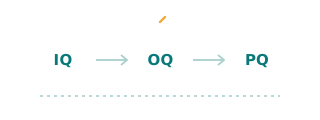

For the detail on this specifically, see equipment qualification software.

  1. 1URSWhat the equipment must do
  2. 2DQThe design meets the URS
  3. 3FAT / SATCommissioning evidence, leveraged
  4. 4IQInstalled as specified
  5. 5OQOperates across its ranges
  6. 6PQPerforms in routine use
Requalification when a change, deviation or periodic review calls for it
Equipment qualification under EU GMP Annex 15: each stage proves something the previous one cannot, commissioning evidence can be leveraged rather than repeated, and a defined change or event triggers requalification.
See it on your own systemBring a URS or a system. We run GxP Copilot against it live on the call.

Sources

Primary documents referred to on this page, from their official publishers.

analytical instrument qualification softwareusp 1058 qualification softwareusp 1058 group a b caiq validation softwarehplc empowerment qualification usp 1058analytical instrument qualification
FAQ

Frequently Asked Questions

Prefer to talk first? Chat with us on WhatsApp or book a call with an expert.

What are USP <1058> Groups A, B and C?

USP <1058> classifies analytical instruments by risk and complexity in their intended laboratory use: Group A covers standard non-calibrated observation equipment verified by visual check; Group B covers instruments providing measured values or controlling physical parameters (such as balances, pH meters and ovens) requiring calibration and IQ/OQ; Group C covers computerised analytical systems (such as HPLC, GC-MS, LC-MS and FTIR) requiring full URS, risk assessment, IQ/OQ/PQ and GAMP 5 validation of the controlling software.

Can Cybroscape GxP Copilot qualify hybrid Group C instruments like an HPLC with Empower or OpenLab?

Yes. Cybroscape GxP Copilot classifies the physical instrument modules under USP <1058> and the workstation or network Chromatography Data System under GAMP 5 Category 4 in the same project, drafting the combined URS, 21 CFR Part 11 / Annex 11 risk assessment, IQ/OQ/PQ protocols and live Requirement Traceability Matrix while enforcing calibration release gates.

Keep reading

All articles
Equipment QualificationInstrument qualification is not equipment qualification: USP <1058> vs Annex 15A balance, an autoclave and a chromatography data system are three different regulatory problems. Which framework applies to what, and why the join is where the defects are. · 7 min readEquipment QualificationWhat triggers requalification, and how much of it you actually needAn undefined trigger means every change becomes a debate, and debates under schedule pressure resolve towards doing nothing. The triggers that belong on every list. · 7 min readEquipment QualificationWarehouse temperature mapping: the decisions that matterTemperature mapping finds a storage area’s warm and cold spots under real conditions, across seasons and loads. Its main output is where to place monitoring sensors and where product can safely be stored. · 3 min readEquipment QualificationASTM E2500 and Annex 15: run verification and still satisfy the annexE2500 is not an alternative to Annex 15: it is an approach you map to it. The 2025 revision closed the terminology gap, and the mapping document is the deliverable. · 7 min readEquipment QualificationCalibration is a qualification prerequisite, not a parallel activityA result produced by an instrument out of calibration is unsupported, and no retrospective calibration repairs it. The three findings that recur, and what an out-of-tolerance event actually requires. · 6 min readEquipment QualificationCommissioning is the biggest reduction available in a qualification packageEquipment arrives already tested at FAT, SAT and commissioning. Annex 15 lets you use that. The three conditions that have to hold, and why they cannot be retrofitted. · 7 min readEquipment QualificationEquipment qualification under Annex 15: what DQ, IQ, OQ and PQ each actually proveFour protocols get signed and nobody can say what any of them demonstrated. The question each stage answers, and what Annex 15 permits that most teams never use. · 7 min readGxP SoftwareBest GxP Software 2027: The Complete Buyer's Guide to Validation, eQMS, LIMS, ELN & MESThe 2027 buyer's guide to GxP software across five core regulated categories: AI & paperless validation (Cybroscape GxP Copilot, Kneat, ValGenesis, Veeva, Sware Res_Q, Valkit.ai), eQMS (Cybroscape eQMS, Veeva, MasterControl, Qualio, SimplerQMS), LIMS, ELN and MES. · 9 min read

Bring a system. We'll show you the package.

Book a demo, or ask a validation lead a quick question on WhatsApp.

  • We reply within one business day
  • We run your URS live on the call
  • You get a clear plan for your system
Chat on WhatsApp

Book a demo

Four fields. The right specialist replies within one business day.

Your details stay private. We never share them.