Run IQ, OQ and PQ from the floor — with evidence and deviations attached.
A mobile-friendly execution experience for the people actually running the tests. Step verdicts, photo and file evidence, and any deviation that opens along the way flow straight into the record and up to the traceability view — no double-entry, no lost paperwork.
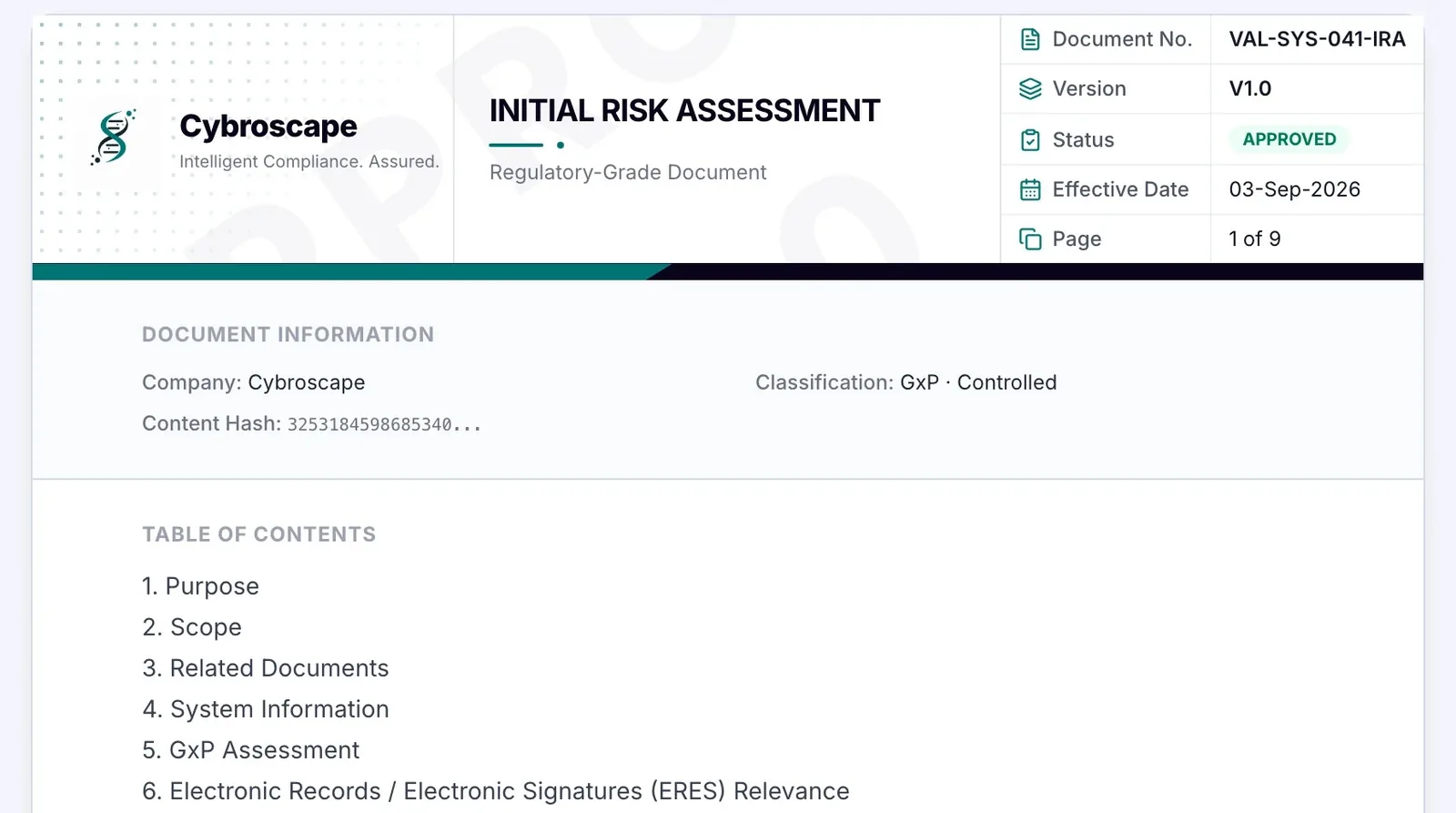
Testing management runs IQ, OQ and PQ execution: per-step verdicts, evidence captured as you go, executor and witness recorded, and a Part 11 signature on the completed record. A failed step raises a deviation automatically, and execution is refused until the plan, the requirements and the protocol are all approved.
Execution is where the paperwork falls apart
Testing is usually done well. Recording it is where the findings come from: screenshots that cannot be attributed to who captured them, evidence pasted into a document days later, a witness signature added retrospectively because nobody was available on the day.
The most damaging version is the protocol approved after it was executed. It is immediately visible from the dates, it is one of the fastest findings an inspector can write, and it almost always happens because of schedule pressure rather than intent.
A gate before anything runs
Execution is refused until the validation plan, the requirements and the protocol itself are approved and the case is marked ready. The order is enforced rather than recommended, which removes the most common finding in this area by making it impossible rather than discouraged.
Where testing management sits in the lifecycle
Deviations and changes is stage 5 of six. Select any stage to see what happens in it.
Deviations raised from failed steps and change controls that show which documents a change affects.
Owners assess impact and close each item with a recorded decision.
Evidence captured in the moment
Verdicts are recorded step by step as the work happens, with evidence attached at the point of capture and sealed so it can be shown to be the file that was taken at the time. The executor is recorded, and where a second person is required their witness signature is captured as part of the record rather than collected afterwards.
A person cannot witness their own execution. That is enforced, not left to the honesty of whoever is filling in the form at the end of a long day.
Failures become deviations, not notes
A failed step raises a deviation automatically and links it to the case, the requirement and the record. The deviation runs its own investigation and resolution, and where a CAPA is needed its effectiveness is tracked before the re-execution closes the loop.
Re-test attempts are recorded as attempts. The history of what failed, why, and what changed before it passed stays visible — which is the question an auditor asks when a test passes on the third attempt.
What you get
What Testing Management delivers
Testing Management is part of the GxP Copilot platform — an AI-native, CSA-first validation system built for regulated Life Sciences. See how it fits with AI Classification Engine, Risk-Based Validation Scoping, AI Risk Assessment.
- Mobile-friendly step execution
- Photo and file evidence capture
- Deviations linked as they happen
- Retest attempts with full lineage
Common questions
Prefer to talk first? Chat with us on WhatsApp or book a call with an expert.
Can a protocol be executed before it is approved?
No. The platform refuses execution until the validation plan, the requirements and the protocol are approved and the case is marked ready. Protocols approved after execution is one of the most common audit findings in validation, and it is prevented structurally here rather than relied on procedurally.
What happens when a test step fails?
A deviation is raised automatically and linked to the step, the test case and the requirement. It runs its own investigation and resolution, with a CAPA and an effectiveness check where needed. The re-execution closes the loop, and the earlier failed attempts remain visible in the record.
Does the platform handle witness signatures?
Yes. Where a second-person verification is required, the witness signs as part of the execution record rather than being collected afterwards. A person cannot witness their own execution — segregation is enforced by the system rather than left to procedure.
Related capabilities
All capabilitiesA guided intake — accelerated by AI, decided by your team — produces GxP impact, GAMP category and composite risk, along with the exact reasoning behind each result. Instead of week-long assessments, you get a classification you can defend to an inspector on the same day. The AI accelerates the input; the classification itself is transparent and controlled.
Learn more about AI Classification EngineRisk-Based Validation ScopingThe Strategy Engine picks the applicable deliverable set for each GAMP category and scales test rigor to per-requirement risk under CSA — choosing between scripted testing, unscripted verification, and leveraged supplier evidence. The output is a validation plan sized to reality, easy to defend, and quick to execute.
Learn more about Risk-Based Validation ScopingAI Risk AssessmentEvery requirement is scored against an ICH Q9 lens for severity, probability and detectability. That score drives the test strategy, the traceability coverage and the inspection-readiness view — so risk stops being a compliance formality and starts sizing your actual work.
Learn more about AI Risk AssessmentDocument Control & VersioningEvery document version is fingerprinted and tagged with its provenance and any AI assistance used. Data-driven sections stay canonical across every deliverable — so what you sign is what you keep, and what you keep is what you show an auditor.
Learn more about Document Control & VersioningAI Validation Document DraftingThe Documentation Engine drafts your validation deliverables in the style of the templates your organisation already uses — with confidence checks, review gates, and a fully functional fallback when the AI is unavailable. Your team stays in control; the platform removes the drudge work.
Learn more about AI Validation Document DraftingLive Traceability MatrixThe Live RTM is always up to date — coverage gaps, orphan tests and inspection-readiness are computed on the fly from the links between requirements, design, tests and results. No more spreadsheet upkeep, no more RTM-freshness debates before an audit.
Learn more about Live Traceability MatrixSources
Primary documents referred to on this page, from their official publishers.
See testing management on your own requirements.
One real requirements document. We show you the draft package built from it, and you keep it either way.
- We reply within one business day
- We run your URS live on the call
- You get a clear plan for your system